Sunday, 6 January 2013

Teenagers

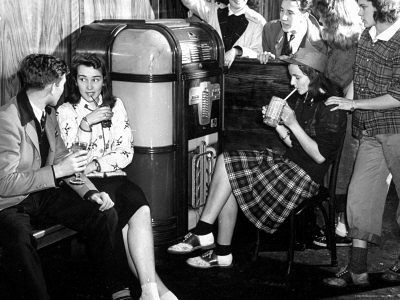
The generation gap was growing evermore throughout the 60s, and it was noticeable. Youth was at the front of society and they were getting confident and determined to create their own styles. Some teenagers were even getting part time jobs and fending for themselves too. Adolescents were becoming the image of a budding youth culture.


The new found freedom of the teenagers led to what was the 'Flower power' decade in the coming years.

Textiles Revolution

As the years went on the textile mill revolutionised, science had arrived and they created more synthetic fibres which broadened the horizons for different fabrics and wool and cotton were overshadowed.
Synthetic fibres were easier to produce, easier to dye, easier to take care of, they could drip dry and were crease resistant.

Menswear 1950s

Throughout the war years Menswear hadn't really changed. But after the war however it was suddenly fashionable for men to become fashionable. Men started to look more like 'businessmen' wearing bowler hats, pinstripe trousers, and longline single breasted coats.
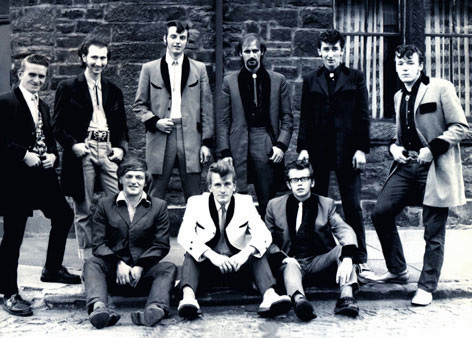
The youth of the 50s created a new style inspired by the "Dandies". This new look was aggressive and was called the 'Teddy boy' look.

Hairstyles

A new hairstyle was in fashion. This was called the DA (Duck's Arse) because at the back of the head  it was shaped like a ducks back end. One of the most famous people to have a DA was Elvis Presley.
Teenagers began to follow 'Fashion culture', and this was when the Jukebox culture arrived.

New fashion styles welcomed in the 50s

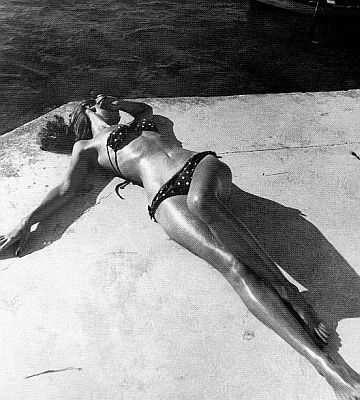
In the 50s, after the war people began to have a lot more leisure time. They went for more holidays and this gave way to a new wardrobe of summer favourites. Beachwear became very popular, and the beachwear stykes were very big in America & Europe. St. Tropez even held annual fashion shows.

in 1947 the first bkini was revealed, but it didnt really take off until a later stage.

The arrival of denim

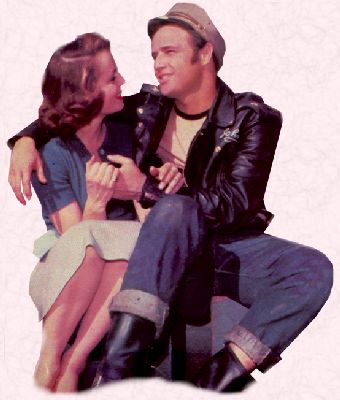
Denim was a new thing in the 50s and it was labelled 'the uniform of teenagers'. It was cool to wear denim. Denim was used alot to make work uniforms because it was breathable and strong and resistant too.


Women's Fashion in the 50s

The Floral daytime dress

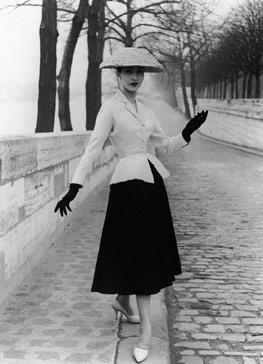
The Floral day dress was proably the most iconic garment of the 1950s. It was influenced by Dior's New Look silhouette.


When the war was over, women were encouraged to go back to their traditonal way of living as men went back to the workforce. They were expected to do the cooking and the cleaning and to keep their role of the 'homemakers'. Women in the 50s were also 'perfectly groomed'. For example they wore eye make up, they wore earrings, gloves and lipstick.

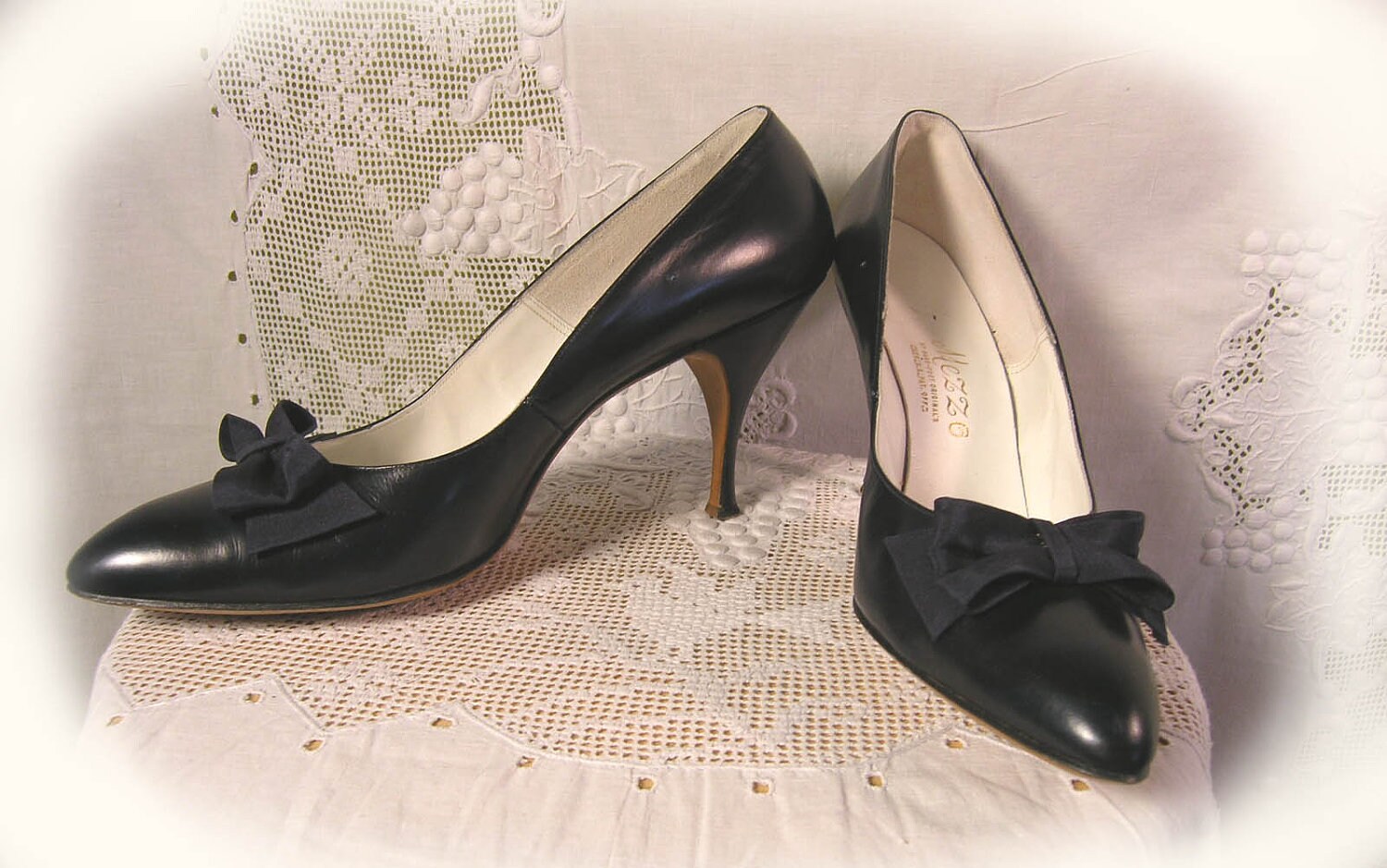
The Stiletto

The 50s saw the introduction of the 'Stiletto'. Which was the footwear equivalent of Dior's new look. It was elegant and sophisticated and was very fashionable.

Change of fashion in the 50s

People started to be more positive after the war. Society took a step forward and so did fashion. It became a household name and it was shared by a wider audience. Christian Dioir revived the 'New Look' in 1947 and this re- established Paris as the fashion capital of the world. Some say that Christian Dior saved the Haute Couture industry.
After this success, Dior's name expanded as he created more fashionable styles and celebrities like the likes of Eva Peron started to wear them. Dior always named his collections, one of them being Envol (1948) this featured scooped skirts and jackets with stand up collars that rebelled against any other previous fashion, this meant that it attracted a wider audience because it was different and people wanted to be different.

WW2

The Fashion industry grounmd to a slow and final halt in 1939. Paris and London showed the last fashion shows of the decade as storm clouds gathered over Europe foreshadowing  a fierce war that was about to take place. Throughout the war rationing was very big and even clothes had to be rationed so this was the main reason that the fashion industry stopped in it's tracks.

Fashion in the War

War changed fashion dramatically. It wasn't about being the best dressed or having designer clothing anymore. It was about having practical clothing that you could survive with. Clothing was being rationed and so were Nylon stockings, so people adopted the slogan 'Make do and mend' which encouraged people to repair their clothing and how to make other clothing out of old clothing instead of going out and getting new ones. 

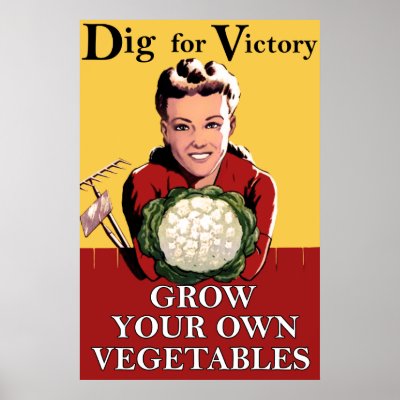
Vogue ran articles about having 'your one and only dress'. Which mean that you had to have one dress that would be your going out wear. Women were encouraged more and more to join the work force so Vogue adopted the slogan 'Dig for victory' which basically meant that the women had to porduce their own food to save on other food resources. Silk also had been banned from civilian use and the rationing of tights meant that American soldiers were the only way of getting more stockings.


Utility Clothing

The Board of Trade commisioned for designers to create a range of clothing that was practical and could be mass produced to save on fabric and labour. Women that worked in the munition factories wore overalls or boiler suits, their hairstyke waa the last bit of glamour that they kept hold of. It was fashionable to have your hair long and curled and to be worn up in a turban or hankerchief. This also was for health and safety requirements.

Fashion and how it helped in WW2

The Paris Hat

After the fashion industry came to halt in paris in 1940, women adopted a new style of hat that laughed in the face of the Nazis. It was oversized and the women wore them with dignity because it showed that they were not scared to stand up with their fashion.
Fashion was also used to help in the war. Accesories were planted like handbags were planted with secret false bottoms so that women could hide resistance leaflets in them. Even scarves had maps of France printed on them to help the soldiers.


American culture

With american soldiers being mobilised in Britain and Europe America had a big influence on the people. They brought over Coca-Cola and chewing gum and Nylon stockings because sweet things and clothing was not being rationed in America. This began to attract the British women and the American soldiers wooed them with gifts of Nylon stockings.

Dance crazes

The Americans also brought with them dance crazes. The 3 main ones were 'Boogie Woogie', Big Band' and 'Swing'.

Zoot Suits

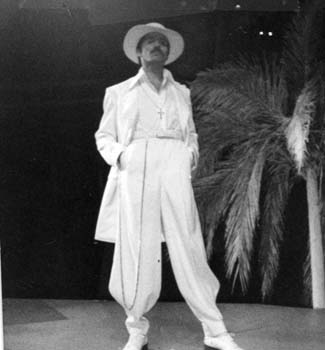
Zoot suits were a style of suit worn by black musicians. It consisted of high waisted trousers, wide legs and wide lapels. This suit heavily influenced menswear at this time and it showed that people were daring to be different. This also supported the situations going on with racism in America at that time.

1947 - War over

In 1947, Paris began to get back to it's usual ways and the fashion industry started up again. The collections in Paris in 1947 were what became known as "The golden age of Couture".